Why this method works
Once you know how to thaw frozen shrimp, you’re only minutes away from adding this versatile, budget-friendly protein option to a long list of shrimp recipes.
- Quick – You can thaw shrimp completely in 15 minutes or less!
- Safe – Using fresh, cold water to thaw the shrimp decreases the risk of bacterial growth, meaning you can rest assured your shrimp is safe to eat.
- Flexible – Once thawed, large or jumbo shrimp are the perfect addition to salads, rice bowls, and pasta dishes.
Once you learn how to thaw frozen uncooked shrimp, you can keep a bag on hand for quick and easy meals like spiced shrimp fried rice and creamy coconut shrimp!

Key Ingredient Notes
- Shrimp – When shopping for frozen shrimp, look for shrimp that are labeled Individually Quick Frozen (IQF) and “shell-on” and, if possible, “wild-caught.” These labels indicate that the shrimp are high-quality, sustainably caught, and have the best taste. While peeled frozen shrimp are easily available, I think that shell-on shrimp have a much firmer, meatier texture and a sweeter flavor. Shrimp size is based on the number of shrimp per pound. Generally speaking, the bigger the shrimp (so the fewer per pound) the less likely you are to overcook it. For this reason, I like to use large to extra-jumbo shrimp in my cooking.
Determining shrimp sizes:
When shopping at the grocery store, you’ll probably notice different numbers on the bags of shrimp. These indicate the shrimp size, giving you an estimation on how many shrimp you can expect per pound. This makes it easy to plan your recipes!
Shrimp sizes are as follows per pound:
- Small (51-60 shrimp)
- Medium (41-50 shrimp)
- Medium-large (36-40 shrimp)
- Large (31-35 shrimp)
- Jumbo (21-25 shrimp)
- Extra-jumbo (16-20 shrimp)
- Colossal (15 or fewer shrimp)
On the label, shrimp sizes will look like 21/25 (for jumbo), 31/25 (for large), etc. As a rule of thumb, the smaller the numbers on the label, the larger the shrimp.
What are deveined shrimp?
The term “deveined” shrimp means that the black, vein-like digestive tract has been removed from the shrimp before they were frozen. This saves you from having to remove it yourself and is a lifesaver when dinner needs to be on the table ASAP.
While some people claim that shrimp that has not been deveined has a superior taste, I find the flavor difference is hardly noticeable. To me, it’s well worth the convenience to go for deveined shrimp in order to save crucial prep time when making dinner!
How to thaw frozen shrimp
- Place shrimp in a bowl of cold water. While it might be tempting to speed the process up with warm or hot water, resist the urge! Using anything but cold water can partially cook the shrimp instead of thawing it out, causing it to become tough and robbery.
- Let the shrimp sit in the cold water for 5 minutes.
- Drain the water from the bowl, and refill it with fresh, cold water.
- Change the water to fresh, cold water every 5 minutes until the shrimp has thawed completely. It usually only takes about 2 rinses. Don’t let the shrimp sit in the water for longer than 5 minutes at a time, or it will get mushy!

- When the shrimp are still semi-frozen (as in, still hard but easy to peel) you can remove the shells. Place the peeled shrimp back in the cold water as you work. It’s okay if they’re still just a little frozen when you begin cooking!
- Pat thawed shrimp dry with paper towels to remove excess moisture before using.

Ways to use frozen shrimp
Once thawed, you can use frozen shrimp in any of your favorite shrimp recipes! If you’re looking for dinner inspiration, some of my favorite options include:
Make-Ahead Tips
Thaw the shrimp in the fridge overnight. Simply move the bag from the freezer, and let it sit for 24 hours. Then, drain the excess water, and your shrimp are ready to cook!
Storing Tips:
- Frozen shrimp should be cooked immediately after thawing to avoid the risk of any foodborne illness. Store uncooked shrimp in the freezer, making sure the bag is properly sealed to avoid freezer burn. Then, make sure to use them before the expiration date printed on the package.
- Once cooked, leftover shrimp can be stored in an airtight container in the fridge for up to 2-3 days.
FAQs:
Unlike farmed shrimp, which are raised commercially in ponds or tanks, wild-caught shrimp are caught from oceans and other natural bodies of water. While they’re on the pricier side, wild-caught shrimp are sweeter with a firmer texture that makes them better for cooking.
Farmed shrimp tend to be slightly mushy and gritty in texture and are often raised with the use of antibiotics. As a result, wild shrimp are well worth the slightly higher price, in my opinion.
No. Warm or hot water can partially cook the shrimp, which causes uneven thawing and increases the risk of foodborne illness.
You don’t want to cook shrimp completely from frozen. However, if they’re partially thawed, meaning they’re still a little frozen in the center, it’s totally fine and often doesn’t even impact the cooking time.
No, defrosting shrimp in the microwave gives the shrimp an unpleasant, rubbery texture.
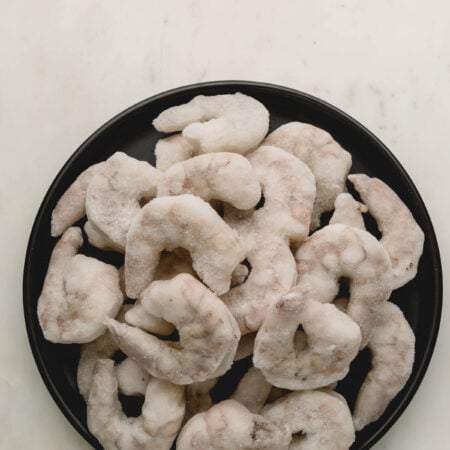
How to Thaw Frozen Shrimp
Ingredients
- 1 pound Frozen shrimp, Note 1
Instructions
- Place the frozen shrimp in a bowl of cold water. Don’t use warm (or hot) water to expedite the process, or you’ll start cooking the shrimp.1 pound Frozen shrimp, Note 1
- Let the shrimp sit in the water for 5 minutes.
- Drain the water. Then, refill the bowl with fresh, cold water. Change the water every 5 minutes until shrimp is fully thawed, usually takes about 2 rinses. Don’t let the shrimp sit in water too long, or they’ll get mushy.
- At this point, the shrimp will be semi-frozen. They’re still hard, but should be easy to peel. Remove the peels, and return the shrimp to the bowl of cold water as you go.
- They’ll continue to thaw while you peel the rest of the shrimp. It’s okay if they’re partially frozen in the middle when you start cooking.
Share your thoughts! If you make this please leave a review letting me know how it was!
Notes
– The size of shrimp is usually defined by how many shrimp per pound.
– Extra jumbo shrimp are labeled 16/20, which means there are 16 to 20 shrimp per pound. The bigger the shrimp, the less likely they’ll overcook.
– Large shrimp are labeled 31-40. Note 1: Use wild-caught shrimp when possible. They have a firmer texture and a slightly sweeter flavor. Storing Tips:
– Frozen shrimp should be cooked immediately after thawing to avoid the risk of any foodborne illness. Store uncooked shrimp in the freezer, making sure the bag is properly sealed to avoid freezer burn and use them before the expiration date printed on the package.
– Once cooked, leftover shrimp can be stored in an airtight container in the fridge for up to 2-3 days.
Nutrition
* Disclaimer: All nutrition information are estimates only. Read full nutrition disclosure.
Tried this recipe?
Make sure to leave a recipe review below!
Sharing of this recipe is encouraged and appreciated. Copying of full recipe to any social media is prohibited.


Comments + Reviews