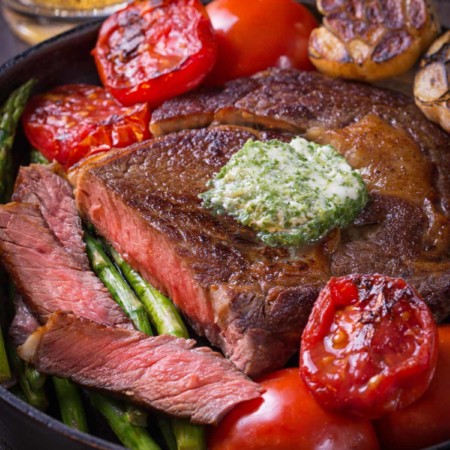
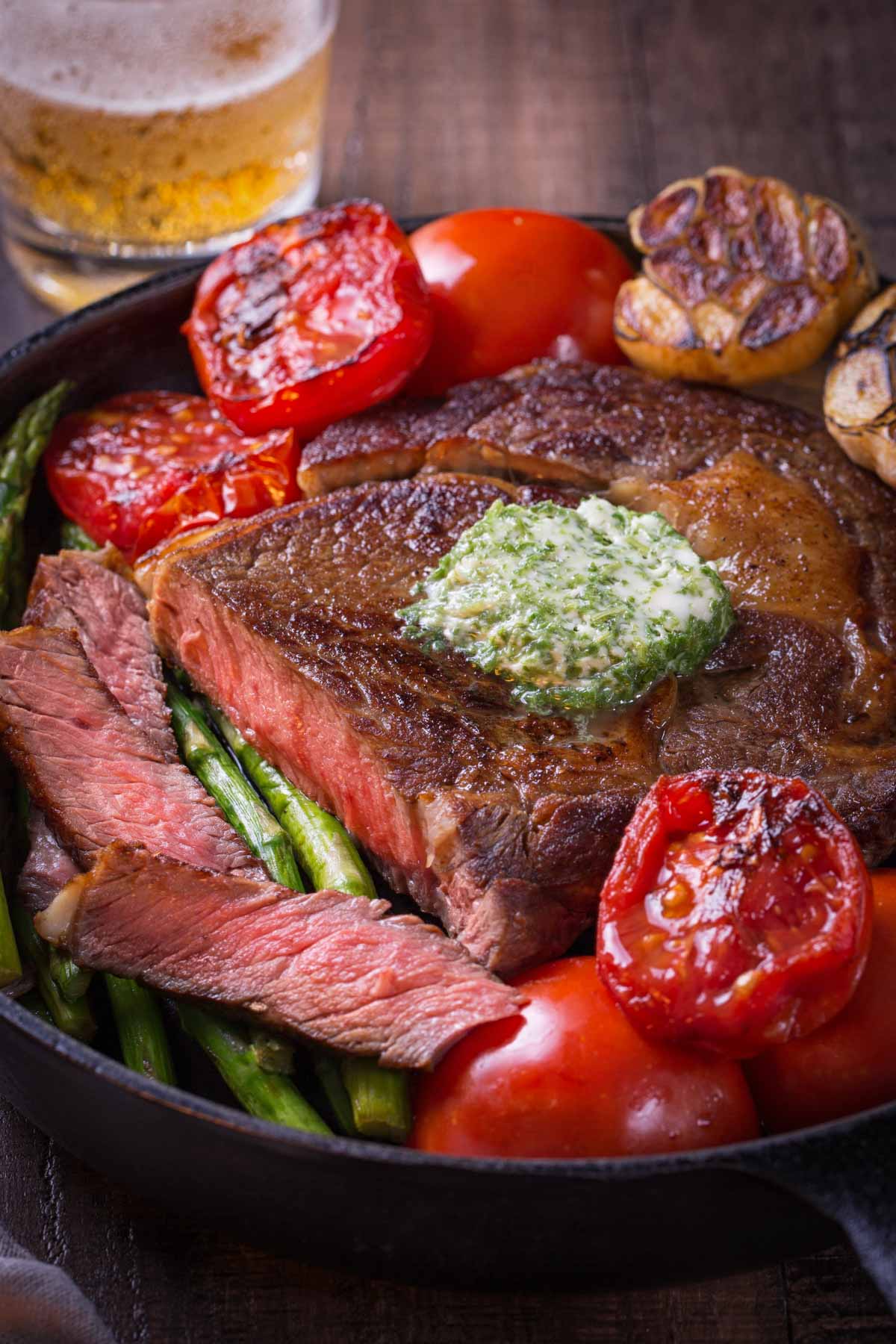
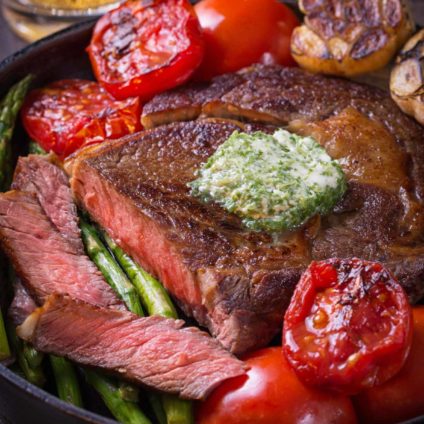
Cooking ribeye steak on the stove is one of the quickest and simplest ways to cook a steak. Follow this recipe to achieve a restaurant-quality pan-sear with a pink, tender center every time. As the wife of a rancher, if there’s one thing I know how to cook well, it’s steak. Ribeye is probably one of my family’s favorite cuts, thanks to its melt-in-your-mouth texture and rich flavor.
But I understand that cooking a ribeye steak intimidates even the best of cooks. And especially when you’re working with an expensive cut of meat, you don’t want to end up with a dry, overcooked steak. That’s why I’m here to teach you this basic cooking technique that even a beginner cook can master! Serve it alongside balsamic honey Brussels sprouts and cheesy mashed potatoes for a steakhouse meal right at home.
Why you’ll love this recipe
- Discover why using a cast iron skillet gives the best sear. You’ll have that deep golden brown crust with juicy pink center every time!
- Make a simple compound butter just like the professional steakhouses. It adds so much flavor and richness to the meat.
- More affordable than going out. If you want to splurge on an expensive cut, making it at home cuts the cost in half.
- A quick and easy meal too. Ready-to-eat in 25 minutes, steak is never something that takes hours and hours to make.
Tips for Busy Cooks
This is one time where you don’t want to buy the cheap meat. Buy a quality cut from your local butcher, and it’ll make all the difference in the flavor and texture.
What is a ribeye steak?
The ribeye is also referred to as the Delmonico, Spencer, or Scotch filet. It’s a well-loved favorite on steakhouse menus because of its buttery flavor. It comes from the primal section called the beef rib. This section collects more fat which is what gives the ribeye its distinctive marbling. The marbled fat melts into the steak as it cooks giving it a juicy and tender texture.
You can buy them bone-in or boneless. A bone-in steak takes a little bit longer to cook. Usually a steak that is 1 1/2 inches thick is perfect for searing perfect right on the stovetop.
Key Ingredient Notes
- Ribeye steaks – Boneless ribeye steaks have lots of marbled fat, which makes them great for pan-searing. They have a rich taste with a juicy, tender bite. If you’re not a fan of the ribeye, another thick steak like a New York Strip is a great option. A thicker steak is less likely to overcook.
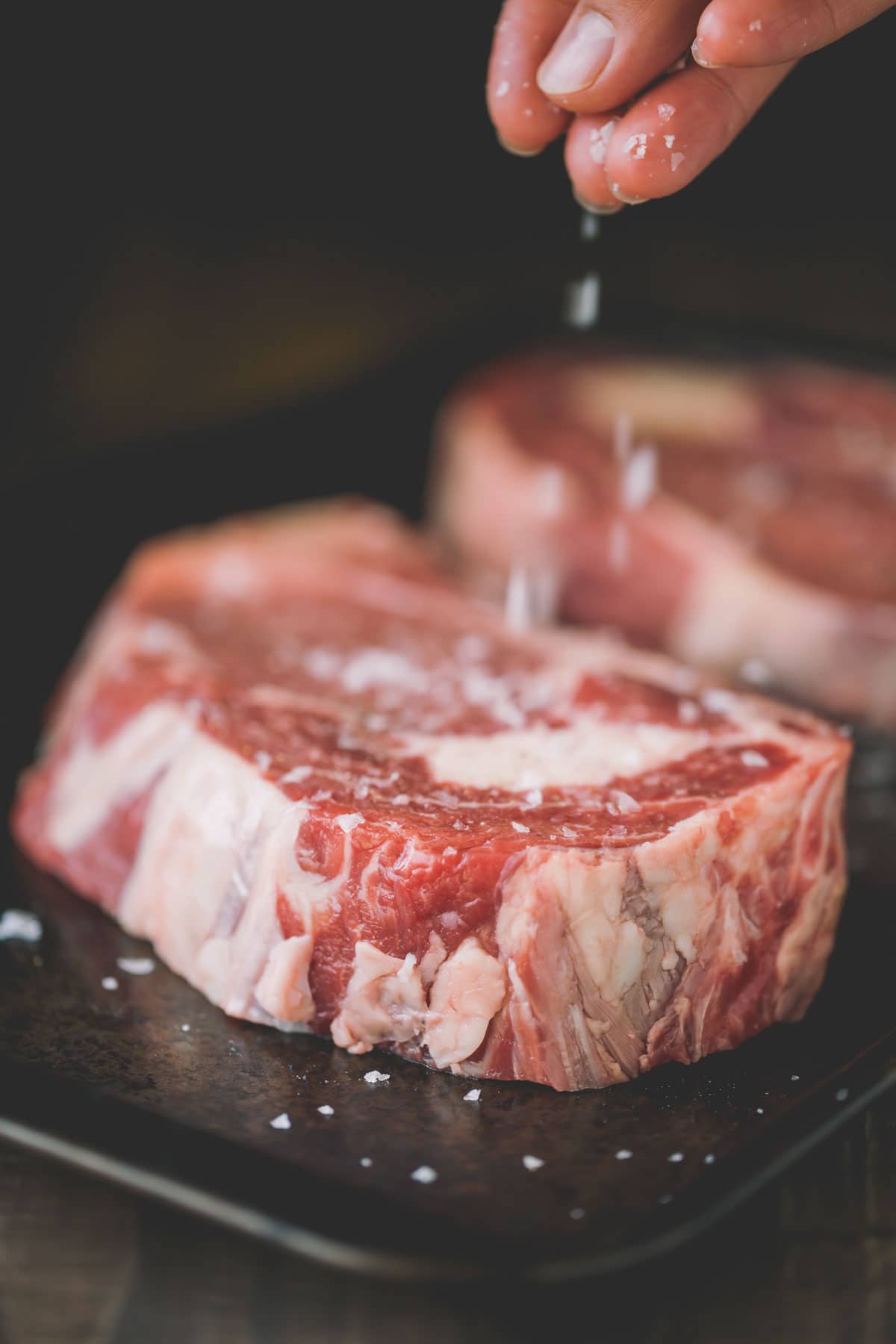
- Salt and pepper – A teaspoon of salt per steak sounds heavy, but it’s not. A generous amount of salt is essential for the best steak. Salt equals flavor. It’s especially important because you can’t season the inside of the steak.
- Vegetable oil – Vegetable oil has a smoke point of 450ºF. It’s great for high-heat cooking because it won’t burn.
How to cook ribeye steak on the stove
1. Season the steaks at least 40 minutes before pan-frying. The salt will draw moisture to the surface, which isn’t ideal for a crisp crust. That’s why salting it early will allow the moisture to reabsorb before it hits the hot pan.
TIP: If you don’t have 40 minutes, no worries, simply salt the steak immediately before you sear it.
2. Heat the skillet over medium high heat until screaming hot. I love using cast iron skillet for searing steak on stovetop. But heavy-bottomed stainless skillet works just as great.
3. Add the oil and heat until it begins to smoke. Be patient! You should hear a sizzle as the steak hits the surface of the pan. You won’t get a nice sear if you drop the steak into a cold oil!
4. Carefully place the steak into the skillet using kitchen tongs. Cook for 3 minutes without disturbing it. Turn and cook for another 3 minutes. Then continue flipping and cooking until desired doneness reached, 2-3 minutes longer.
5. Sear the sides of the steak. Check the temperature of the steak with a meat thermometer. For medium rare, remove the steak from the skillet when the internal temperature reaches 125°F. Remember the steak will continue to cook once you remove it from the pan.
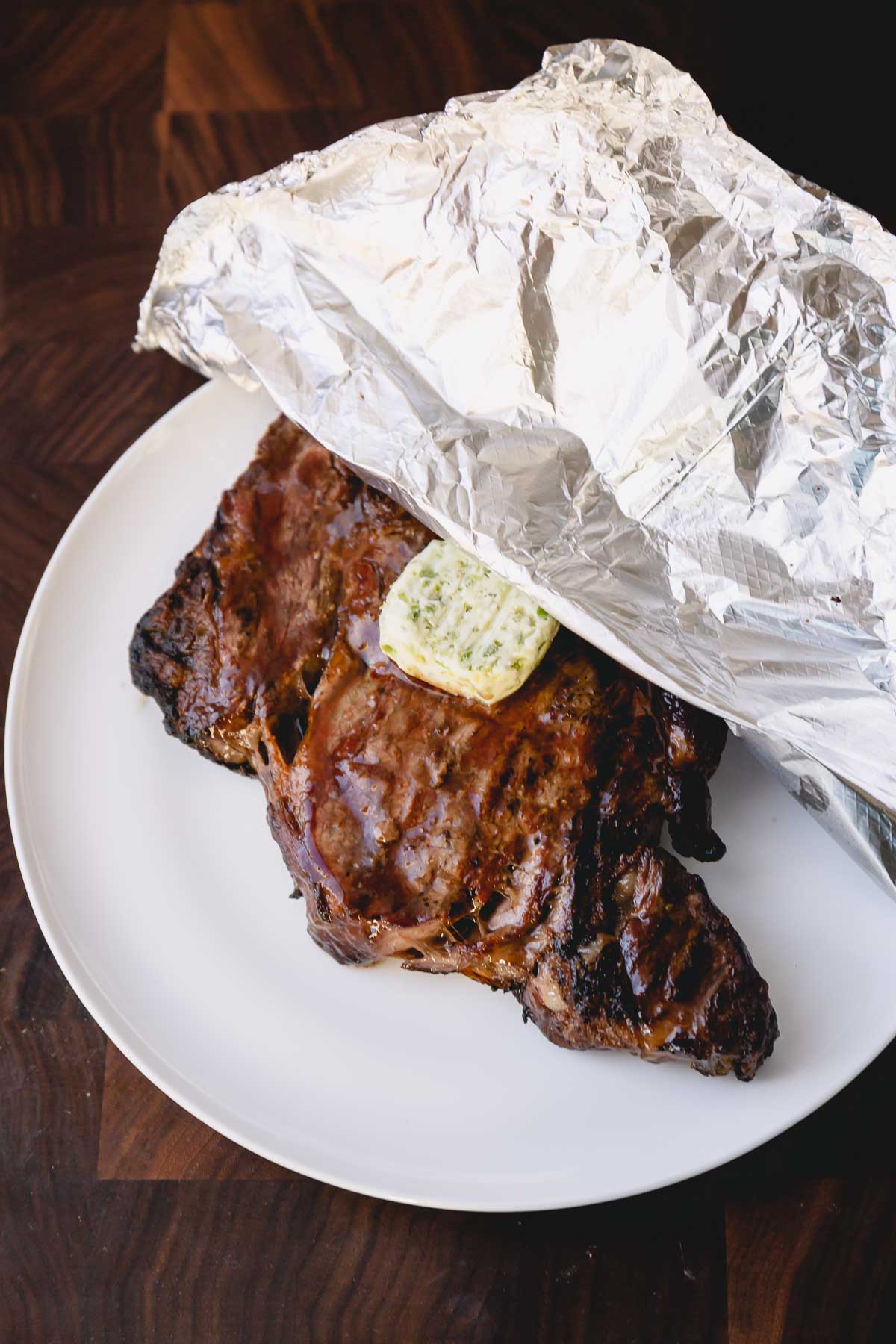
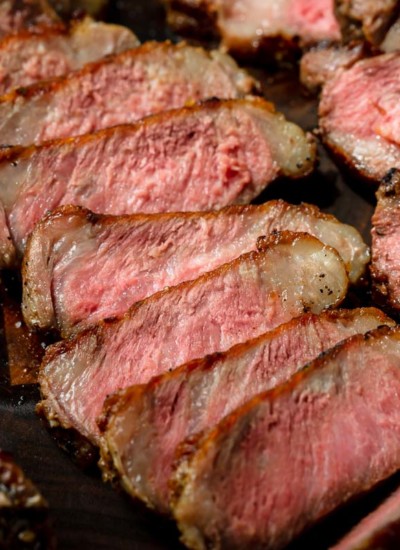
6. Remove the steak from the skillet to a plate or cutting board and cover with aluminum foil. Let it rest for 10 minutes before slicing. If you cut the steak immediately, you’ll lose all the juices!
Top your pan seared ribeye steaks with a slice of herb butter, if desired, and enjoy!
Expert Tips:
- Try to get thick-cut ribeye steak, it’s less likely to overcook it. I recommend at least 1.5-inch, and preferably 2-inch steak.
- Preheat your cast iron or heavy-bottomed skillet. A screaming hot skillet is crucial for perfectly seared steak.
- Be sure to use oil with a high-smoke point like vegetable, avocado, or canola. Save your olive oil for another recipe.
- When searing the steak, don’t move it frequently. This will disrupt the sear, let the skillet cook and only flip every couple of minutes as indicated in the recipe method.
- Remember your steak will continue to cook once you remove it from the heat. You can expect it to rise another 5 degrees. This means if you want a medium-rare steak, you should remove it from the heat when it’s 125°F instead of 130°F.
- Let the steak rest so you don’t lose all the juice! This is essential to having a juicy steak when it’s time to serve. Rest for 10 minutes for best results.
- Slice the steak against the grain to serve. This way you cut through the muscle fibers and make it easier to chew.
Storage
Store any leftover cooked steak in an airtight container in the refrigerator for up to 3 days. Reheat the steak on the stovetop in a skillet over medium heat or in the oven. To reheat in the oven, place the steak on a cooling rack over a sheet pan. Place it into a preheated 275ºF oven and let the steak cook until it reaches 115ºF. For a crisp crust, sear it on both sides in a hot skillet afterward.
Don’t reheat the steak in the microwave! This will result in a tough and chewy overcooked piece of meat! If you want a new way to use the leftovers, steak fried rice is a great way to repurpose.
We don’t recommend freezing cooked steak since it can change the texture and flavor once thawed.
Make-ahead tips
- Plan ahead – Nobody likes a cold steak! Make sure your sides are ready around the same time as your steak. I like to make mashed potatoes the day before and reheat. French fries, dinner rolls, wedge salad, and roasted veggies are great options with minimal prep.
- Buy steaks ahead of time – Steaks stay fresh in the refrigerator for up to 3 days. If the meat is a great price, buy more and freeze the extra steaks for later.
- Make the garlic butter – Herb butter stays fresh in the refrigerator for up to 5 days. Make it the night before to save time!
What to serve with this ribeye steak recipe
Even though a juicy steak is the star of the show, sides complete the experience! Here are a few side dishes that complement a perfectly cooked steak:
FAQs:
You can easily cook it on the stove in a cast iron pan for a good sear on the outside and tender inside. The oven is best for after searing to bake it to your desired temperature with a meat thermometer. Usually the oven is only used when it’s a very thick cut of steak.
This depends on the thickness of your steak and how you like it cooked. A thin steak can only take 2 to 3 minutes per side while a thicker one can take up to 6 minutes. The best way to know if it’s cooked properly is to use a meat thermometer. Medium-rare is an internal temperature of 130°F, medium 140°F, and medium well 145°F. Remember a steak’s temperature will continue to rise about 5 degrees once you remove it from the heat.
This is the method that we use for our stovetop ribeye. It means cooking each side 3 minutes and flipping each time. This helps the juices to evenly cook and distribute within the meat so that you have the most tender bite.
More easy dinner recipes
Pan Fried Ribeye Steak
Pan-Seared Ribeye Steak Recipe
Ingredients
For steaks:
- 2 boneless ribeye steaks 1.5-inch thick (about 20oz) Note 1
- 2 teaspoons coarse kosher salt
- 1 teaspoon black pepper
- 2 tablespoons vegetable or canola oil Note 2
Instructions
- Dry the steaks with paper towel to remove excess moisture. Then generously salt and pepper the steaks at least 40 minutes prior to cooking, OR right before cooking.
- Heat cast iron skillet (or heavy-bottomed stainless steel skillet) over medium high heat.
- Add oil and heat until shimmering.
- Carefully place the steak in the skillet, using kitchen tongs, and cook for 3 minutes. Turn and cook for another 3 minutes. Then continue flipping and cooking until desired doneness reached, 2-3 minutes longer. Sear the sides of the steaks as well.
- Start checking for doneness with a meat thermometer. For medium rare doneness, remove the steak as soon as it the internal temperature reaches 125°F.
- Remove the steak onto a wooden cutting board. Cover with foil and rest for at least 10 minutes before cutting and serving.
Share your thoughts! If you make this please leave a review letting me know how it was!
Notes
– Store leftover cooked steak in an airtight container in the refrigerator for up to 3 days.
– Reheat the steak on the stovetop in a skillet over medium heat or in the oven. To reheat in the oven, place the steak on a cooling rack over a sheet pan. Place the sheet pan into a preheated 275°F oven and let the steak cook until it reaches 115°F. For a crisp crust, sear it on both sides in a hot skillet afterward.
– Don’t reheat the steak in the microwave! This will result in a tough and chewy overcooked piece of meat!
– This leftover steak fried rice is a great way to repurpose leftovers!!
Nutrition
* Disclaimer: All nutrition information are estimates only. Read full nutrition disclosure.
Tried this recipe?
Make sure to leave a recipe review below!
Sharing of this recipe is encouraged and appreciated. Copying of full recipe to any social media is prohibited.
Stay connected and join Busy Cooks community:
FACEBOOK | PINTEREST | INSTAGRAM


Reader's Reviews
Laura says
Wow! I followed your directions – so simple and easy – and result was fantastic! First time I’ve ever nailed ribeye before!
Shinee says
Yay, so great to hear you tried and loved my recipe. Thank you for your feedback, Laura!!
Heidi says
Oh!! This recipe is the Bomb!! <3
Shinee says
Hi, Heidi!! So happy you tried and loved the recipe!! Thank you for your feedback!!