If you’re looking for an elevated dinner recipe that is still easy to prepare, this salmon pesto pasta is our a family favorite. It’s a restaurant-quality pasta recipe that’s easy to make on a weeknight, but also elegant enough to cook for friends on the weekend (they will be so impressed!).
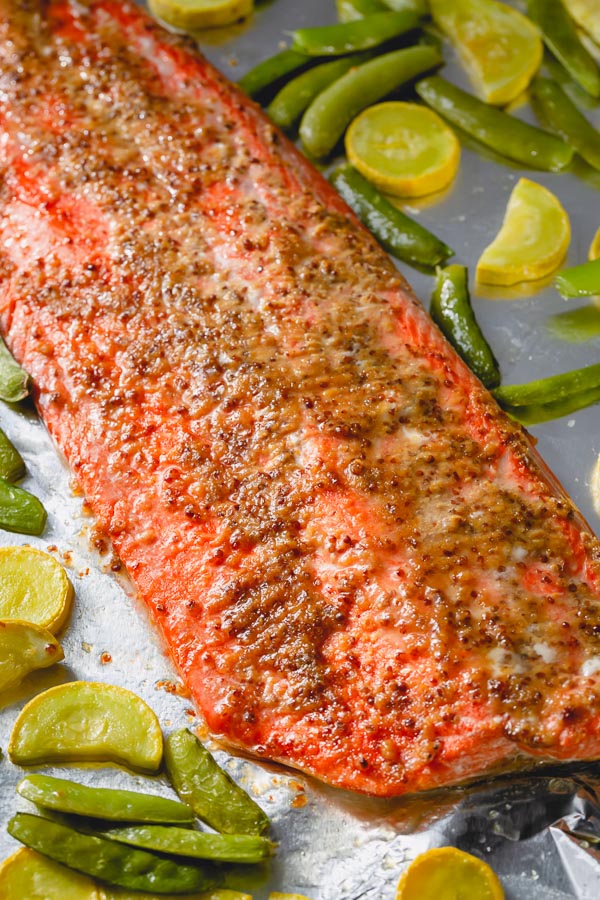
If you love salmon recipes, try our spicy apricot salmon or baked salmon with pesto. They are some of our most loved recipes by our readers!
Why you’ll love this recipe
- Restaurant-style recipe in 30 minutes. It’s just that simple, you will have this impressive salmon pasta on the table in no time!
- Easy-to-find ingredients. With just 7 ingredients, this is a dinner that’s both simple to shop and affordable.
- One pot and one skillet is all you need. This simple dinner is easy to clean-up; all you need is a pot to boil the pasta, plus a skillet to cook the salmon and assemble everything together.
- Customize this pasta with other vegetables or seafood. Rather than use asparagus, try using peas or zucchini. If you want to try this pasta with another type of seafood, shrimp is a delicious choice.
Tip for Busy Cooks: If you have skin-on salmon at home, don’t worry! Remove it yourself carefully with a knife before cooking (scroll down for all of our tips on how to do this), or cook it with the skin. Once the salmon is fully cooked, simply peel off the skin and flake the fish.
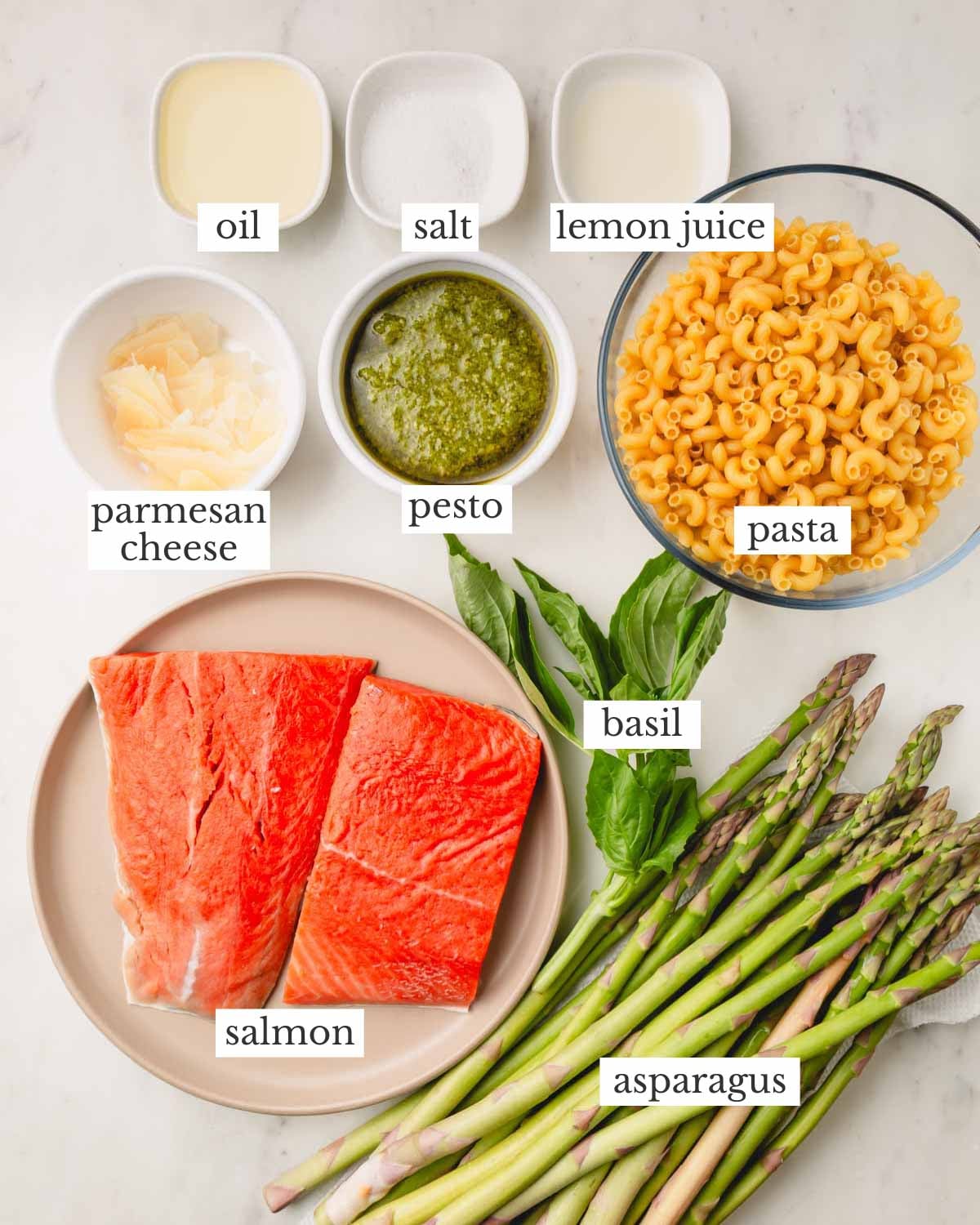
Key Ingredient Notes
- Pasta – Use any pasta noodle you already have in your pantry or your favorite variety when shopping at the store.
- Skinless salmon – Ask your fishmonger to remove the skin for you to make it easy. We recommend wild-caught salmon, it’s flaky and pairs perfectly with the pesto and parmesan flavors.
- Olive oil – The cooking oil for this pasta dish, be sure to use a high-quality extra-virgin olive oil.
- Basil pesto – You can make a homemade pesto recipe quickly, or buy your favorite store-bought version.
- Asparagus – We recommend buying asparagus stalks that aren’t too thick, but medium in thickness. Be sure to trim the woody ends and discard them before prepping for the pasta recipe.
- Fresh lemon juice – This is an acid that brightens all of the flavors of the pasta dish. Be sure to use fresh lemon juice and not bottled.
- Parmesan cheese – Pre-grated, flaked, or a block that you grate yourself all work well. It adds extra creaminess as well as saltiness to every bite.
- Fresh basil leaves – These are for garnish and to add extra fresh herb flavor.
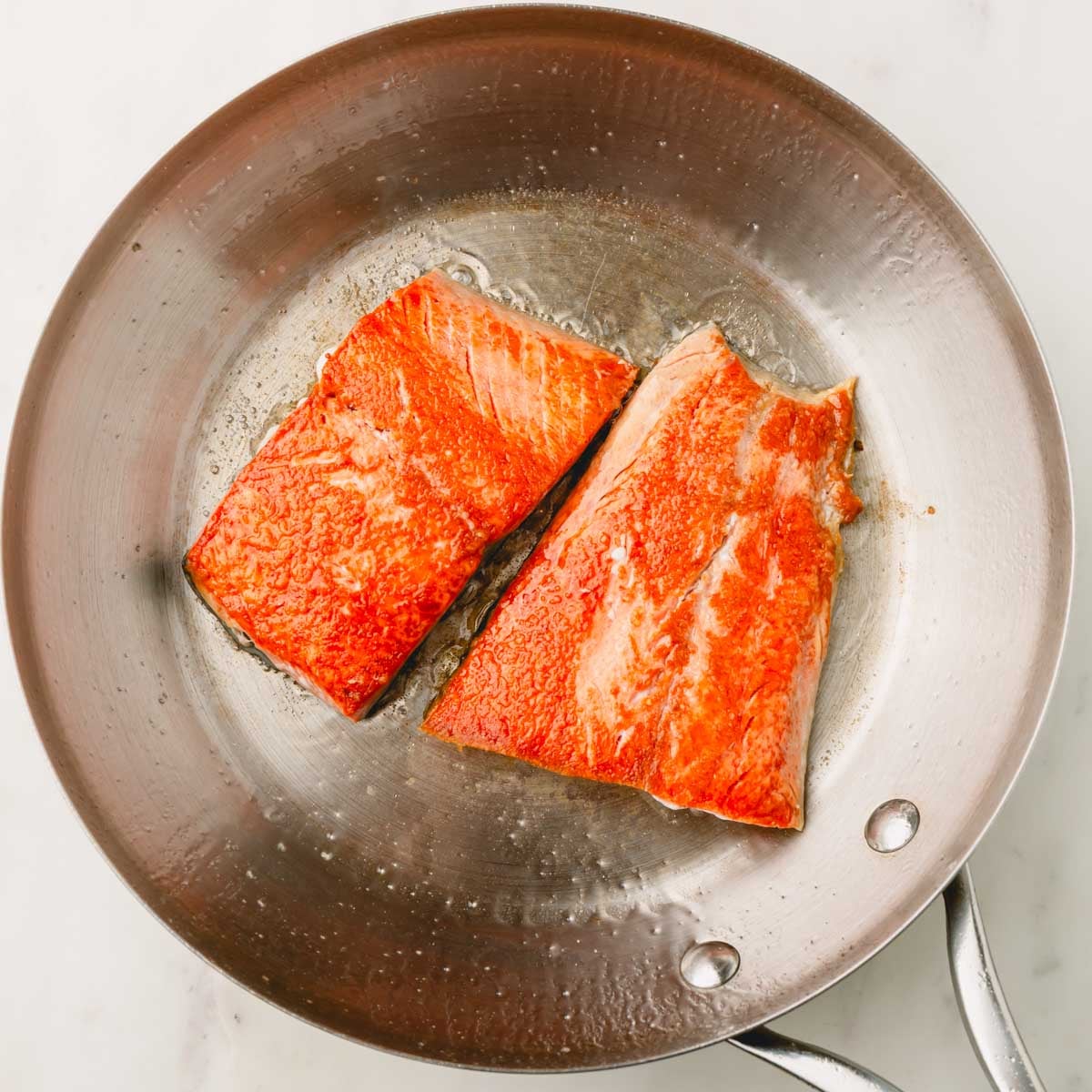
How to make salmon pesto pasta
- Boil the pasta according to the package directions. Reserve ¼ cup of the pasta cooking water to use later.
- Salt the salmon evenly.
- Heat the olive oil in a large skillet until shimmering over medium-high heat.
- Add the salmon and cook for about 5 minutes or until golden brown. Flip it over and cook for another 3 minutes or so until the internal temperature reaches 125°F. (I love this instant thermometer!) Remove the salmon to a plate and set aside, covered.
- Deglaze the skillet with the pasta cooking water, scraping the browned bits with a wooden spoon/spatula.
- Add pesto, asparagus, and pasta. Stir well and cook for 3-4 minutes, covered, until the asparagus is softened.
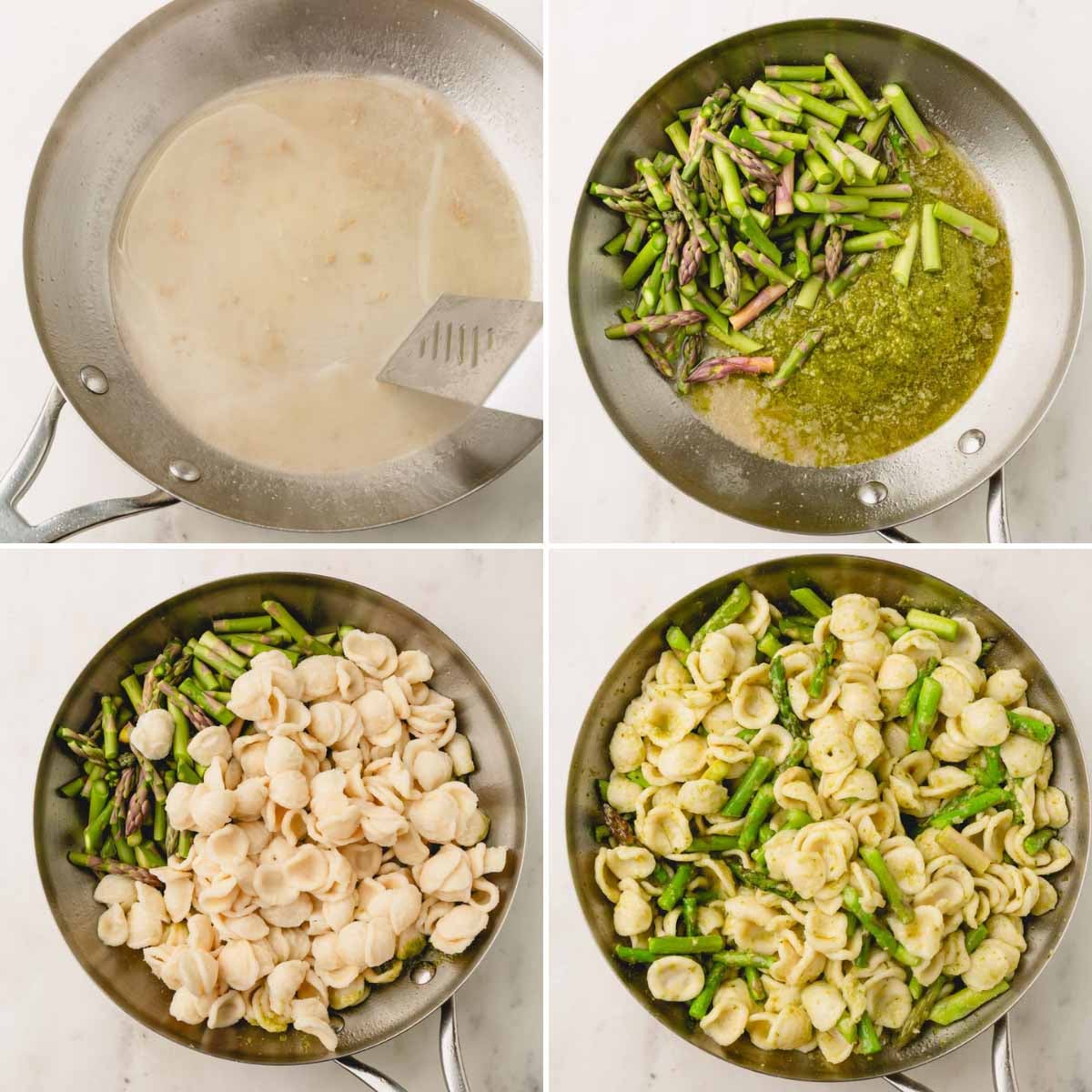
- Flake the salmon into chunks with a fork and add it to the pasta. Sprinkle over lemon juice and parmesan cheese.
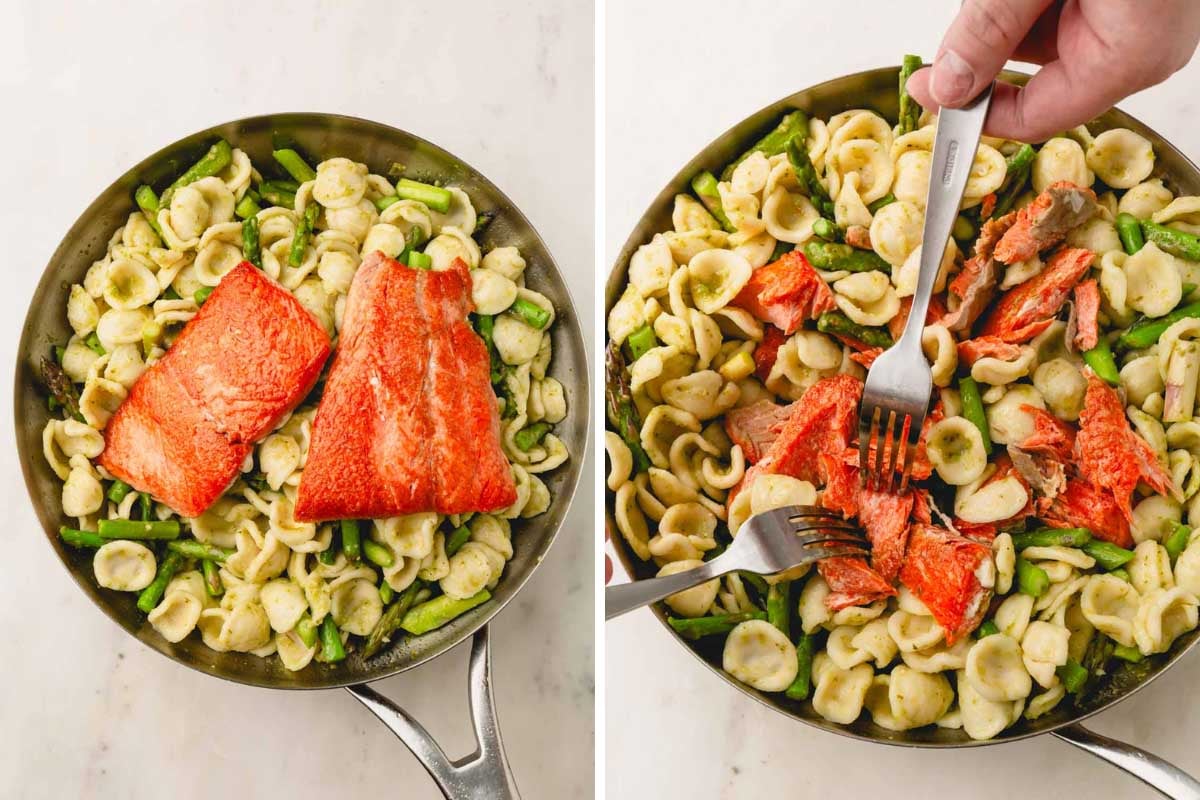
Expert Tips:
- Be sure to reserve starchy pasta cooking liquid for binding the sauce. When making any pasta recipe, the pasta cooking liquid is the golden secret ingredient. This water is drizzled into the pasta when combining all the ingredients at the end of cooking to help the pesto adhere to the noodles and make the perfect silky sauce.
- Use a nonstick pan to help with cooking the fish. If you are afraid the salmon will stick to the pan, use a nonstick skillet instead.
- Cook the pasta until al dente. This will be listed on the package instructions. This guarantees your noodles won’t be mushy.
- Use a thermometer to determine when the salmon has finished cooking. This will ensure that the salmon is cooked to your liking. We recommend cooking the salmon to 125ºF for medium-rare or 145ºF for medium-well to well. This is our favorite instant thermometer.
- To remove the salmon skin yourself, carefully place the salmon skin-side down on the cutting board. Using a chef knife, very carefully begin to cut away the skin from the flesh. Once enough skin has been removed, hold the loose skin taut and continue dragging the knife against the flesh to remove it in one piece.
Variations and Substitutions
There are all sorts of different ways to customize this pesto salmon pasta based on seasonal ingredients or what you may be craving!
- Swap out the salmon for another seafood. This pesto pasta would also be delicious with shrimp or seared scallops.
- Use another type of pesto. Sun-dried tomato pesto, pea pesto, or mint pesto are flavors that would all work well in this recipe.
- Add a splash of heavy cream. If you are looking for a creamier sauce, you can add a little bit of heavy cream to the sauce with the pesto.
- Customize the vegetables. We are using asparagus here, but peas, artichoke hearts, zucchini, or summer squash also work well.
What to serve with pesto pasta and salmon
There are so many flavorful side dishes to pair with this pasta with pesto and salmon. Some of our favorites include:
Storing Tips
- Store any leftover pasta in an airtight container in the fridge for up to 2 days. The leftovers happen to be delicious served cold too!
- Reheat the pasta in the microwave for a couple of minutes. Alternatively, you can reheat in a skillet on the stovetop over low heat with a splash of water until warmed through and saucy.
- We don’t recommend freezing this pasta recipe as it will change the texture of the fish and the noodles.

FAQs
Be sure to use a meat thermometer and look to see the salmon is opaque and pink in color. Cook to 125ºF for medium-rare and 145ºF for medium-well to well.
No, you want to toss the pasta with the pesto while it’s still hot, so it binds well to the noodles for a more flavorful bite.
Yes, be sure to thaw the salmon completely overnight in the fridge and pat it very dry with paper towels before cooking.
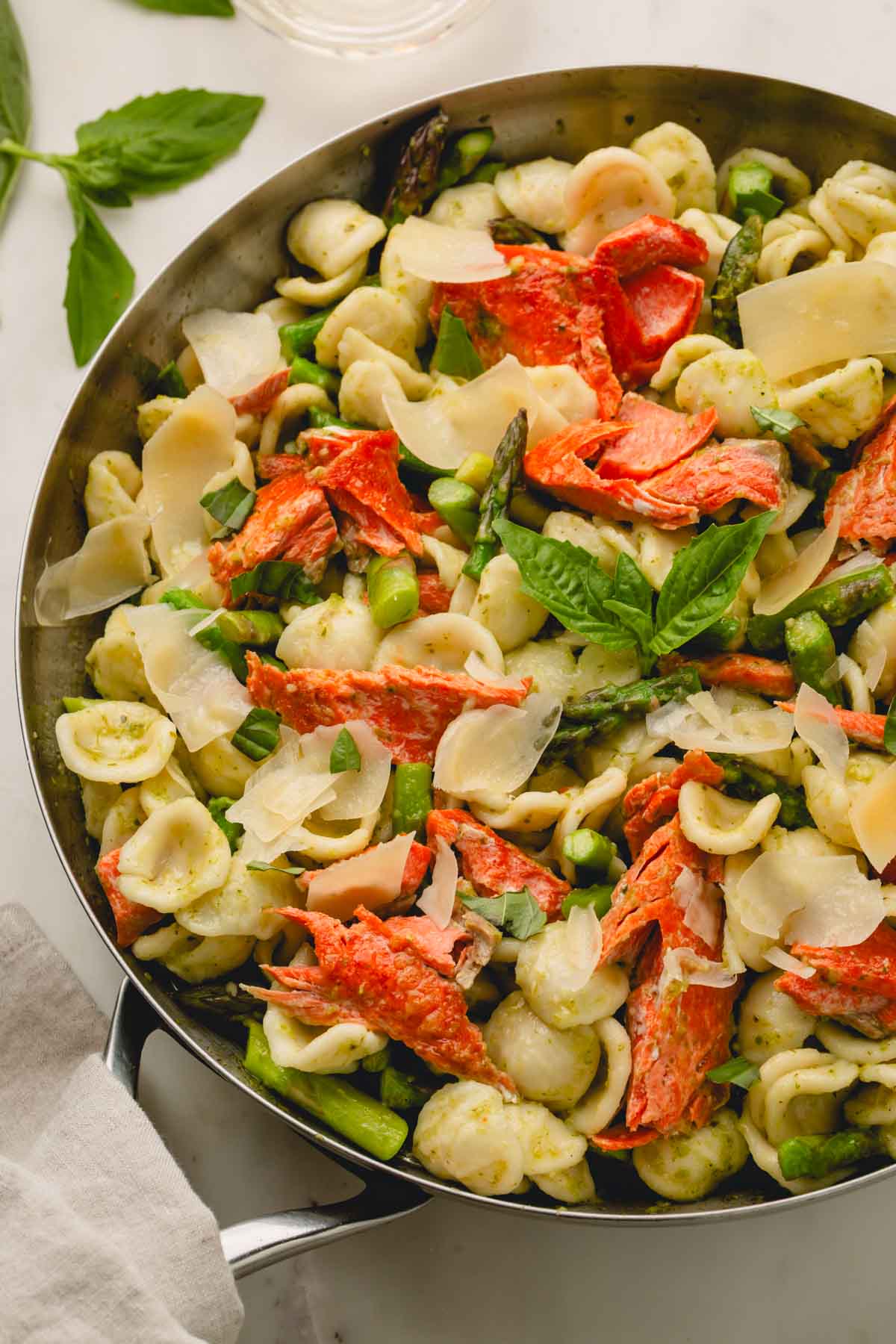
This pasta with pesto and salmon is a fresh and delicious twist on a classic seafood recipe. It’s bursting with so many gourmet flavors and will impress your family and friends. Give it a try tonight with any pasta noodles you have on-hand.
More Easy Salmon Recipes

Salmon Pesto Pasta
Ingredients
- 8 ounces pasta
- 1 pound skinless salmon
- 1 teaspoon coarse kosher salt
- 1 tablespoon olive oil
- ½ cup pasta cooking water
- ½ cup pesto homemade or your favorite store-bought version
- 1 pound asparagus cut into bite-sized pieces
- 1 teaspoon fresh lemon juice
- ¼ cup parmesan cheese
- Fresh basil leaves to garnish
Instructions
- Cook the pasta according to the package directions.
- Salt the salmon evenly.
- In a large skillet, heat the oil until shimmering over medium-high heat.
- Add the salmon and cook for about 5 minutes or until golden brown. Flip it over and cook for another 3 minutes or so until the internal temperature reaches 125°F. (I love this instant thermometer!) Remove the salmon to a plate and set aside, covered.
- Add ¼ cup of pasta cooking water into the skillet and deglaze the pan, scraping the browned bits with a wooden spoon.
- Add pesto, asparagus, and pasta. Stir well and cook for 3-4 minutes, covered, until asparagus is softened.
- Flake the salmon into chunks with a fork and add it to the pasta along with lemon juice and parmesan cheese.
Share your thoughts! If you make this please leave a review letting me know how it was!
Notes
– Store any leftover pasta in an airtight container in the fridge for up to 2 days.
– Reheat the pasta in the microwave for a couple of minutes, or in a skillet on the stovetop over low heat with a splash of water until warmed through and saucy.
– We don’t recommend freezing this pasta recipe as it will change the texture of the fish and the noodles.
Nutrition
* Disclaimer: All nutrition information are estimates only. Read full nutrition disclosure.

Tried this recipe?
Make sure to leave a recipe review below!
Sharing of this recipe is encouraged and appreciated. Copying of full recipe to any social media is prohibited.


Comments + Reviews